Heterogeneous catalysts are materials that facilitate chemical reactions by providing a surface for reactants to adsorb and react. The size and shape of the catalyst particles play a crucial role in their activity and selectivity, but the underlying mechanisms behind these effects have not been fully understood.
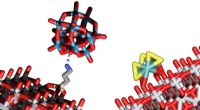
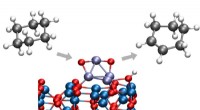
In this study, the researchers used a combination of experimental and theoretical techniques to investigate the structure-property-performance relationships of heterogeneous catalysts. They synthesized a series of palladium nanoparticles with different sizes and studied their catalytic activity for the hydrogenation of ethylene, a reaction that is important in the production of fuels and chemicals.
The results revealed that the activity of the palladium nanoparticles increased with decreasing particle size. This trend was attributed to the higher surface area of smaller particles, which provided more active sites for the reaction. However, the researchers also found that the electronic properties of the nanoparticles changed with decreasing particle size, which affected the selectivity of the reaction.
Specifically, the researchers observed a decrease in the d-band center of the palladium nanoparticles with decreasing particle size. This change in the electronic structure resulted in a shift in the reaction selectivity from the desired product, ethane, to the undesired product, methane.
The findings of this study provide a deeper understanding of the relationship between the size, activity, and electronic properties of heterogeneous catalysts. This knowledge can be used to guide the rational design of more efficient and selective catalysts for a wide range of industrial processes.
In addition to the fundamental insights gained from this study, the researchers also demonstrated the practical implications of their findings by designing a new palladium catalyst with improved activity and selectivity for the hydrogenation of ethylene. This catalyst could potentially be used to improve the efficiency and reduce the cost of producing fuels and chemicals.
Overall, this study represents a significant advancement in the field of catalysis and opens up new avenues for the development of more sustainable and efficient catalytic processes.