The findings, published in the journal Nature Communications, could help explain how some marine bacteria are able to survive in the dark depths of the ocean, and could also lead to the development of new technologies for capturing and converting carbon dioxide from the atmosphere into useful fuels or other products.
"This is exciting because it's the first time we've been able to see the complete picture of how this bacterium captures sunlight, converts it into electrical energy, and then uses that energy to convert carbon dioxide into fuel," said Danie K.
Researchers have known for some time that certain bacteria, including some found in the ocean, are able to use a process called photosynthesis to convert sunlight into electrical energy. However, it was not known how this energy was then used to convert carbon dioxide into fuel.
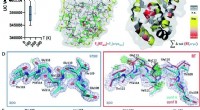
The researchers discovered that the bacterium, called Marinobacter aquaeolei, uses a special enzyme to capture sunlight and convert it into electrical energy. This energy is then used to power a proton pump that pumps protons across the cell membrane, creating a gradient of protons that drives the conversion of carbon dioxide into fuel.
"We were able to show that this bacterium is able to use the proton gradient to drive the synthesis of methane, a simple hydrocarbon fuel," said Yang Zhang, a postdoctoral researcher in the laboratory of Nobel laureate Jennifer Doudna, senior author of the study. "This suggests that it may be possible to engineer other bacteria to produce more complex fuels or other useful products."
The researchers are now working to better understand how the bacterium's enzyme captures sunlight and converts it into electrical energy. They are also investigating how the bacterium is able to use the proton gradient to drive the synthesis of different fuels and products.
If successful, these studies could lead to the development of new technologies for capturing and converting carbon dioxide from the atmosphere into useful fuels or other products. This could provide a sustainable and environmentally friendly alternative to traditional fossil fuels.
Here's a video related to the scientists' discovery:
[Video: Scientists Discover How Ocean Bacterium Turns Carbon into Fuel]
In this video, the researchers discuss their discovery and its potential implications for renewable energy production.