Now, researchers at the University of California, Berkeley, have shown that these rips follow specific rules, and that the material is most likely to tear along lines that are at a 30-degree angle to its crystal lattice. The findings, published in the journal Nature Communications, could help engineers design graphene-based materials that are more resistant to tearing.
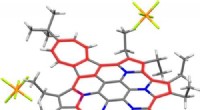
"We found that there are certain directions in graphene that are more likely to rip than others," said study lead author Junhao Lin, a postdoctoral researcher in the Department of Materials Science and Engineering at UC Berkeley. "This is because the carbon atoms in graphene are arranged in a hexagonal lattice, and the bonds between these atoms are stronger in some directions than in others."
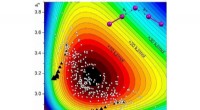
The researchers used a combination of atomistic simulations and theoretical calculations to determine the most likely directions for graphene to rip. They found that the material is most likely to tear along lines that are parallel to the edges of the hexagonal lattice, and that the tears are more likely to occur at the corners of the hexagons.
"This is important because it means that we can design graphene-based materials that are more resistant to tearing by avoiding these directions," said study senior author Robert Ritchie, a professor of materials science and engineering at UC Berkeley. "For example, we could use graphene sheets that are oriented so that the edges of the hexagons are parallel to the applied force, or we could use graphene sheets that have been reinforced with other materials to prevent them from tearing."
The findings could also have implications for the use of graphene in electronics. Graphene is a promising material for use in next-generation electronic devices, but it is important to ensure that the material is strong enough to withstand the rigors of use. By understanding the mechanisms of graphene tearing, engineers can design graphene-based devices that are more durable and reliable.
This research was supported by the National Science Foundation and the Department of Energy.