Electron transport is a fundamental process in biology that allows cells to generate energy. It involves the transfer of electrons from one molecule to another, and it is essential for many cellular functions, such as photosynthesis, respiration, and oxidative phosphorylation.
The efficiency of electron transport is influenced by a number of factors, including the amino acid side chains and the peptide secondary structure of the proteins involved. Amino acid side chains can interact with the electron transport chain and affect the rate of electron transfer, while peptide secondary structure can provide a scaffold that supports the electron transport process.
A new study, published in the journal Nature Communications, has shed light on how amino acid side chains and peptide secondary structure change electron transport. The study, conducted by researchers at the University of California, Berkeley, used a combination of experimental and computational methods to investigate the role of these factors in electron transport.
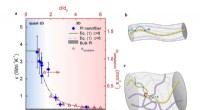
The researchers found that the electron transfer rate was increased by the presence of aromatic amino acid side chains, such as tryptophan and tyrosine. These side chains can interact with the electron transport chain and facilitate the transfer of electrons. In addition, the researchers found that peptide secondary structure, such as alpha-helices and beta-sheets, can also affect the electron transfer rate. Alpha-helices can provide a rigid scaffold that supports electron transport, while beta-sheets can create a more flexible environment that allows for easier electron transfer.
The findings of this study provide new insights into the molecular mechanisms of electron transport. This knowledge could be used to develop new drugs and therapies that target electron transport and improve cellular function.
Here are some additional details about the study:
* The researchers used a combination of experimental and computational methods to investigate the role of amino acid side chains and peptide secondary structure in electron transport.
* The experimental methods included fluorescence spectroscopy, electron paramagnetic resonance spectroscopy, and protein crystallography.
* The computational methods included molecular dynamics simulations and quantum mechanical calculations.
* The researchers found that the electron transfer rate was increased by the presence of aromatic amino acid side chains, such as tryptophan and tyrosine.
* The researchers also found that peptide secondary structure, such as alpha-helices and beta-sheets, can also affect the electron transfer rate.
* The findings of this study provide new insights into the molecular mechanisms of electron transport.
* This knowledge could be used to develop new drugs and therapies that target electron transport and improve cellular function.