Chemical engineers at the University of California, Berkeley, have discovered a new way to pattern solid surfaces to control how water interacts with them. The technique could lead to new materials for water purification, desalination, and other applications.
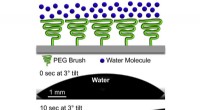
The researchers, led by Professor Nitin Padture, used a technique called "block copolymer self-assembly" to create patterns of hydrophilic (water-attracting) and hydrophobic (water-repellent) regions on a solid surface. By controlling the size and spacing of these regions, they were able to tune the way that water droplets behaved on the surface.
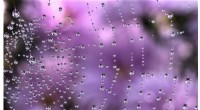
For example, the researchers found that they could create surfaces that caused water droplets to spread out and form a thin film, or that caused them to bead up and roll off. They also found that they could control the direction of water flow on the surface, by creating patterns of hydrophilic and hydrophobic stripes.
The researchers believe that their technique could be used to create a variety of new materials with tailored water-repellent properties. These materials could be used for a variety of applications, such as water purification, desalination, and oil-water separation.
Water purification
One potential application for the researchers' technique is in water purification. By creating surfaces that attract water, it is possible to remove impurities from water. For example, the researchers found that they could remove salt from water by using a surface that was patterned with hydrophilic and hydrophobic stripes. The water droplets would flow along the hydrophilic stripes, while the salt ions would be repelled by the hydrophobic stripes. This process could be used to purify water for drinking, irrigation, or industrial use.
Desalination
Another potential application for the researchers' technique is in desalination. Desalination is the process of removing salt from seawater to produce fresh water. By creating surfaces that repel water, it is possible to separate salt water into pure water and concentrated brine. The researchers found that they could create surfaces that were so hydrophobic that they could even repel saltwater droplets. This process could be used to desalinate seawater for drinking, irrigation, or industrial use.
Oil-water separation
The researchers' technique could also be used to separate oil and water. Oil and water are immiscible liquids, meaning that they do not mix. However, it can be difficult to separate oil and water if they are mixed together. By creating surfaces that attract water and repel oil, it is possible to separate the two liquids. The researchers found that they could create surfaces that were so hydrophobic that they could even repel oil droplets. This process could be used to separate oil from water in industrial processes, such as oil refining and drilling.
The researchers' technique is a promising new way to control the interaction of water with solid surfaces. This technique could lead to new materials for water purification, desalination, oil-water separation, and other applications.