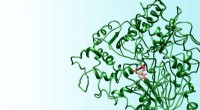
The researchers, from the University of California, Berkeley, studied a nutrient sensor called the TOR (target of rapamycin) pathway. This pathway is found in all eukaryotes, which include animals, plants, and fungi. The TOR pathway helps cells sense the availability of nutrients and adjust their growth accordingly.
The researchers found that the TOR pathway is made up of two components: a kinase domain and a HEAT (Huntingtin, elongation factor 3, PR65/A subunit of protein kinase A, TOR1) domain. The kinase domain is responsible for sensing nutrients, while the HEAT domain is responsible for transmitting this signal to the rest of the cell.
The researchers showed that the kinase domain of the TOR pathway evolved from an existing protein kinase, while the HEAT domain evolved from an existing HEAT domain protein. This means that the TOR pathway was created by combining two existing elements, rather than by evolving a completely new protein.
This finding suggests that evolution can create new proteins by combining existing elements, rather than by starting from scratch. This could help scientists understand how organisms adapt to changing environments, as they may be able to create new proteins by combining existing elements, rather than having to evolve completely new proteins.
The researchers published their findings in the journal Nature Structural & Molecular Biology.