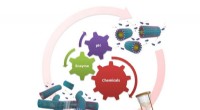
Pyrolysis is a promising recycling technology that allows plastic waste to be used as a valuable alternative to fossil fuels for the production of fuels, chemicals, and materials. The process does not require water and involves the thermal decomposition of plastic waste into more straightforward components. Currently, the use of catalysts, especially heterogeneous catalysts, for pyrolysis has shown the potential to enhance selectivity towards targeted products and improve the efficiency of the process. Researchers have been actively exploring the development and enhancement of heterogeneous catalysts for plastic pyrolysis. However, a detailed understanding of the interplay between the catalyst's properties and the pyrolysis behavior is still limited, hindering the rational design of efficient catalysts.
In this work, the interplay between the catalyst's properties and pyrolysis behaviors during the catalytic pyrolysis of low-density polyethylene (LDPE) plastic waste over hierarchical metal zeolite catalysts was investigated. The hierarchical structure enhances the mass and heat transfer properties, and the presence of metal facilitates the bond cleavage of LDPE molecules. Detailed characterizations and analysis revealed the evolution of physicochemical properties during the catalytic pyrolysis process, including catalyst coking and the evolution of active sites. The results provide insights into the catalyst's deactivation mechanism, which can guide the rational design of stable and efficient catalysts for pyrolysis.
The research team analyzed how the composition of the catalyst and the reaction conditions affected the products of the pyrolysis process. They found that by using a catalyst containing zinc and a specific type of zeolite, they could produce more valuable products, such as benzene, toluene, and xylene, which are commonly used in the production of fuels and other chemicals.
This research could have significant implications for the recycling of plastic waste. By using pyrolysis to break down plastic into smaller molecules, it is possible to recover valuable resources and reduce the environmental impact of plastic waste. The researchers plan to continue their work to develop and optimize the pyrolysis process and to explore new ways to use the products of pyrolysis to create new materials and products.