Some ion channels can also form structures that permit the delivery of drugs into cells. These structures are called "ion channel pores." Ion channel pores are formed when two or more ion channels come together to create a larger pore. This pore allows drugs to enter the cell more easily.
A recent study has found how some ion channels form these structures. The study, which was published in the journal "Nature," found that the formation of ion channel pores is triggered by a specific type of protein. This protein is called "synaptotagmin-1."
Synaptotagmin-1 is a protein that is found in the membranes of nerve cells. It is involved in the release of neurotransmitters, which are the chemical messengers that allow nerve cells to communicate with each other.
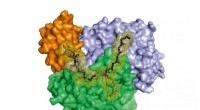
The study found that synaptotagmin-1 binds to the ion channels and causes them to change shape. This change in shape creates the ion channel pores that allow drugs to enter the cell.
The discovery of how some ion channels form ion channel pores is a significant breakthrough. It could lead to the development of new drugs that can be delivered more easily into cells. This could have a major impact on the treatment of a variety of diseases, such as cancer, heart disease, and neurological disorders.
![Novel Monoterpene-Polyketides with Spiro[3,5]nonane Uncovered in Australian Shrub](https://www.scienceaq.com/article/uploadfiles/202110/2021102311320532_S.jpg)