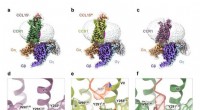
Cryo-EM is a powerful imaging technique that allows scientists to visualize the structure of proteins and other biological molecules in three dimensions. The technique works by freezing a sample of molecules in liquid nitrogen and then using an electron microscope to take pictures of the frozen sample. The resulting images can be used to create a three-dimensional model of the molecule.
However, cryo-EM images are often noisy, which can make it difficult to distinguish between atoms and noise. This is especially true for small molecules, such as proteins.
The new method, called "AtomHunter," uses a machine-learning algorithm to identify atoms in cryo-EM images. The algorithm is trained on a database of known atomic structures, and it can use this information to identify atoms in new images.
"AtomHunter is a significant advance in cryo-EM," said study lead author Dr. Yifan Cheng, a postdoctoral fellow in the UCSF Department of Bioengineering and Therapeutic Sciences. "It will allow researchers to obtain more accurate and detailed images of proteins and other biological molecules."
The researchers tested AtomHunter on a variety of cryo-EM images, including images of proteins, viruses, and bacteria. They found that AtomHunter was able to identify atoms in all of the images, even in noisy images where atoms were difficult to see.
"AtomHunter is a powerful new tool that will be of great value to cryo-EM researchers," said study senior author Dr. Dmitri K. Saldin, a professor in the UCSF Department of Bioengineering and Therapeutic Sciences. "It will enable researchers to obtain more accurate and detailed images of proteins and other biological molecules, which will lead to a better understanding of their structure and function."