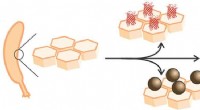
1. Catalyst Complexity: Catalysts are often complex materials that consist of multiple components and structures. Understanding the intricate interactions between these components and how they influence the catalytic activity is a challenging task.
2. Reaction Conditions: Catalysts are typically used in demanding reaction conditions, involving high temperatures, pressures, and corrosive environments. These conditions can exacerbate catalyst degradation and affect their performance, making it difficult to optimize their effectiveness.
3. Selectivity and Specificity: Catalysts often need to demonstrate high selectivity and specificity for a desired reaction. Achieving this level of control over the catalytic process is challenging due to side reactions, competing pathways, and the influence of impurities.
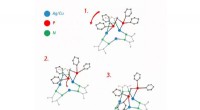
4. Characterization Techniques: Characterizing catalysts at the atomic and molecular levels to understand their structure-function relationship is essential for optimization. However, obtaining accurate and comprehensive characterization data can be complex and limited by the capabilities of available analytical techniques.
5. Computational Methods: Computational approaches, such as density functional theory (DFT) and molecular dynamics simulations, are valuable tools for studying catalysts. However, these methods can be computationally expensive and may require significant computational resources to provide reliable predictions.
6. Catalyst Stability and Deactivation: Catalysts can undergo various deactivation mechanisms, such as sintering, fouling, and poisoning, which reduce their activity and lifespan. Optimizing catalysts to improve their stability and resistance to deactivation is a significant challenge.
7. Multi-component Catalysts: Many catalytic processes involve multi-component catalyst systems, where multiple catalysts work together to achieve a desired reaction. Optimizing the interactions and synergistic effects between these components adds complexity to the optimization process.
8. Process Integration: Catalysts are often integrated into complex industrial processes, where they interact with other process components and conditions. Optimizing catalysts in such integrated systems requires a holistic understanding of the entire process and the impact of the catalyst on process efficiency, safety, and sustainability.
Despite these challenges, ongoing research, advancements in characterization techniques, and computational methods continue to improve our understanding and optimization of catalysts. Collaborations between academia, industry, and research institutions play a crucial role in addressing these challenges and developing innovative catalyst technologies.