Here's an overview of the key findings and significance of these lab experiments:
Fluid Flow and Confinement:
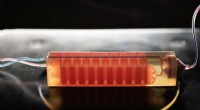
In these experiments, researchers used high-pressure and high-temperature conditions to create a simulated environment that mimics Earth's deep subsurface, where hydrothermal fluids circulate and interact with minerals. They then introduced a mixture of organic molecules, including amino acids and nucleic acid bases, into the experimental setup.
Isolation and Preservation:
As the organic-rich fluids flowed through narrow cracks and pores within the minerals, the molecules became trapped and isolated. The cracks acted as tiny compartments, protecting the molecules from degradation and promoting their preservation over long periods.
Origin of Life and Biosignatures:
The preserved organic molecules include those considered essential building blocks for life, such as amino acids and precursors to nucleic acids. The fact that these molecules could become isolated and preserved in the simulated subsurface conditions suggests that similar environments on ancient Earth might have supported the development of primitive life.
Implications for Exploring Mars and Beyond:
These findings have significant implications for the exploration of Mars and other planetary bodies. The presence of isolated and preserved organic molecules in confined subsurface environments on Earth hints at the possibility that similar conditions may have existed elsewhere in the solar system and could potentially harbor evidence of past or present life.
Limitations and Future Research:
The experiments provide promising insights, but they are still simulations of deep Earth processes. Further studies and field expeditions are needed to investigate whether such conditions and preserved molecules exist in natural geological settings on Earth or in environments on other planets.
Overall, these lab experiments underscore the potential role of cracks and confined environments in preserving evidence of early life and have implications for the search for biosignatures in extreme environments on Earth and beyond.