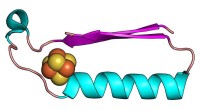
There are a number of ways that molecules can form knots. One way is through self-assembly. This happens when the molecule folds itself into a knotted structure, without any help from external forces. Another way that knots can form is through entanglement. This happens when two or more molecules become intertwined, and cannot be separated without breaking them.
The formation of molecular knots is often a complex process. However, some general principles have been identified. For example, it is known that smaller molecules are more likely to form knots than larger molecules. This is because the smaller molecules have more freedom to move around and arrange themselves into knotted structures.
Molecular knots have a number of interesting properties. For example, they are often more stable than their non-knotted counterparts. This is because the knots can lock the molecules into place, and prevent them from moving around. Molecular knots can also be used to create new materials with unique properties. For example, molecular knots have been used to create new types of drug delivery systems, and to improve the conductivity of materials.
Molecular knots have a wide range of applications, in fields such as biology, chemistry, materials science, and drug discovery. In biology, they are used to study the structure and function of DNA and other biological molecules. In chemistry, they are used to develop new methods for creating molecules with specific properties. In materials science, they are used to create new materials with improved strength, conductivity, and other properties. In drug discovery, they are used to develop new drugs that are more effective and have fewer side effects.
The field of molecular knots is still in its early stages, but it has the potential to revolutionize our understanding of matter and how it can be used to create new technologies.