Background:
Conventional cancer treatments, such as chemotherapy and radiation therapy, often lack precision and can lead to severe side effects. Heat-based therapies offer a promising alternative by precisely targeting and destroying cancerous tumors. However, the precise mechanisms underlying the therapeutic effects of heat at the nanoscale have remained elusive.
The Role of Disorder:
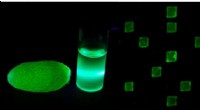
The MIT research team, led by Professor Michael Strano, focused their attention on tiny crystals known as "quantum dots," which are semiconductors measuring only a few nanometers in size. They discovered that introducing disorder into the arrangement of atoms within these quantum dots significantly enhanced their ability to generate heat when exposed to light.
Mechanism:
The researchers attribute this enhanced heat generation to a phenomenon called "phonon scattering." Phonons are quasiparticles that represent the collective vibrations of atoms within a material. In disordered quantum dots, the irregular arrangement of atoms disrupts the propagation of phonons, causing them to collide more frequently and transfer their energy more effectively to the surrounding tissue. This increased energy transfer leads to localized heating, selectively damaging cancerous cells while sparing healthy tissue.
Applications:
The potential applications of this discovery are far-reaching. By controlling the degree of disorder within quantum dots, researchers can fine-tune the amount of heat generated and target specific types of cancer cells with precision. This approach could lead to more effective and less invasive cancer treatments, reducing the need for extensive surgeries or systemic therapies.
Furthermore, the ability to generate localized heat at the nanoscale opens up exciting avenues for other therapeutic applications, including drug delivery, tissue regeneration, and gene therapy. The precise control over heat generation enabled by disordered quantum dots could revolutionize the field of nanomedicine.
Significance:
The study by MIT researchers represents a significant breakthrough in understanding the role of disorder in nanoscale crystals. By demonstrating the potential of disordered quantum dots for heat-therapeutic applications, they have paved the way for a new generation of targeted cancer treatments and innovative nanomedicine strategies. This research holds immense promise for advancing personalized and effective healthcare solutions in the future.