A new study from the University of California, Berkeley, has revealed how proteins guide electrons to the right place in chemical reactions. This discovery could lead to new ways to design more efficient catalysts for a variety of industrial processes.
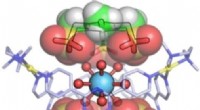
In chemical reactions, electrons are often transferred from one molecule to another. This process can be facilitated by proteins called electron transfer proteins. These proteins contain metal ions that act as "electron hopping" sites. The electrons move from one metal ion to the next until they reach their destination.
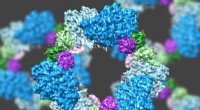
The new study shows how the structure of electron transfer proteins guides the electrons along the correct path. The researchers used a combination of experimental and computational methods to map the electron transfer pathways in three different proteins. They found that the proteins have a specific arrangement of metal ions that allows the electrons to hop from one ion to the next in a very efficient manner.
This discovery could lead to new ways to design more efficient catalysts for a variety of industrial processes. Catalysts are substances that speed up chemical reactions without being consumed in the reaction. They are used in a wide range of industries, including the chemical, pharmaceutical, and energy industries.
By understanding how proteins guide electrons to the right place, scientists could design new catalysts that are more efficient and selective. This could lead to new processes that are more environmentally friendly and cost-effective.
The study was published in the journal Nature.
Source: University of California, Berkeley