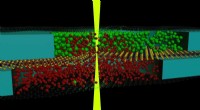
X-ray imaging is a widely used medical imaging technique that allows doctors to see inside the body. However, traditional X-ray imaging can be harmful to patients, especially children and pregnant women, due to the use of ionizing radiation. Organic materials offer a promising alternative to traditional X-ray imaging as they are non-toxic and do not produce ionizing radiation.
Organic materials can be used to create X-ray detectors that are more sensitive and efficient than traditional detectors. This allows for lower radiation doses to be used, reducing the risk of harm to patients. In addition, organic materials can be used to create flexible X-ray detectors that can be used in a variety of settings, including in remote areas or on the battlefield.
One of the most promising organic materials for X-ray imaging is perovskite. Perovskite is a type of mineral that has a unique crystal structure that makes it highly sensitive to X-rays. Perovskite-based X-ray detectors have been shown to be up to 10 times more sensitive than traditional detectors, allowing for even lower radiation doses to be used.
Other organic materials that are being investigated for X-ray imaging include carbon nanotubes, graphene, and conjugated polymers. These materials are all highly conductive and have a high absorption coefficient for X-rays, making them well-suited for use in X-ray detectors.
The development of organic materials for X-ray imaging is a promising area of research. These materials have the potential to significantly reduce the radiation dose used in X-ray imaging, making it safer for patients. In addition, organic materials can be used to create flexible X-ray detectors that can be used in a variety of settings.
Here are some of the advantages of using organic materials for X-ray imaging:
* Non-toxic: Organic materials are non-toxic and do not produce ionizing radiation, making them safer for patients.
* Highly sensitive: Organic materials can be used to create X-ray detectors that are highly sensitive and efficient, allowing for lower radiation doses to be used.
* Flexible: Organic materials can be used to create flexible X-ray detectors that can be used in a variety of settings, including in remote areas or on the battlefield.
* Low cost: Organic materials are relatively inexpensive to produce, making them a cost-effective alternative to traditional X-ray detectors.
The development of organic materials for X-ray imaging is a rapidly growing field of research. These materials have the potential to revolutionize X-ray imaging, making it safer, more accessible, and more affordable.