Duncan Smith/Photodisc/Getty Images
Scientists agree that every living organism on Earth shares a common ancestor, yet the origins of that ancestor remain a profound mystery. While we still lack a definitive explanation for the very first step into life, researchers have amassed a wealth of evidence that allows us to piece together a plausible narrative.
One of the most compelling reconstructions suggests that the earliest life forms were heterotrophs—organisms that relied on external organic molecules for energy and growth. This perspective is often referred to as the heterotroph hypothesis and offers a logical bridge between the primordial chemistry of early Earth and the emergence of more complex life.
Biologists categorize life into two broad energy‑seeking strategies: heterotrophy and autotrophy. Understanding these distinctions is key to grasping how life could have progressed from simple to complex.
Autotrophs synthesize their own food from inorganic sources using either light (photosynthesis) or chemical reactions (chemosynthesis). Plants, algae, and many bacteria generate sugars and other organic molecules, forming the base of food webs. Photosynthesis captures solar energy, while chemosynthesis exploits chemical gradients such as hydrogen sulfide or methane to fuel growth.
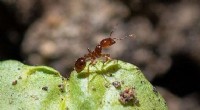
Heterotrophs depend on pre‑existing organic compounds, often consuming other organisms. Examples span the spectrum—from mammals and insects to protists and amphibians. Humans, for instance, derive energy by eating plants or animals; we lack the machinery to manufacture food internally.
Autotrophic metabolism is chemically intricate and likely required extensive evolutionary refinement. In contrast, early Earth’s environment was rich in simple organic molecules—amino acids, nucleotides, and sugars—produced through processes such as lightning strikes, volcanic activity, and ultraviolet radiation. These “building blocks” could have been readily available for consumption by nascent organisms.
For a hypothesis to hold, it must explain how the first organisms obtained nutrients before the emergence of autotrophs. The heterotroph model posits that primitive life forms scoured the primordial soup for these compounds, setting the stage for the eventual evolution of self‑sustaining autotrophic pathways.
Experimental studies, including the famed Miller–Urey experiment, demonstrate that simple atmospheric conditions can synthesize a variety of organic molecules. The resulting “primordial soup” would have supplied the raw materials needed for early heterotrophic organisms.
As these early heterotrophs grew and diversified, they likely increased the demand for organic matter. This pressure may have spurred the evolution of autotrophic mechanisms, granting organisms the ability to produce their own food and thus gain a competitive advantage in nutrient‑scarce environments.
One of the most widely accepted explanations for the rise of autotrophy involves endosymbiosis. Chloroplasts—the organelles that enable photosynthesis—are believed to have originated as free‑living photosynthetic bacteria. When larger heterotrophic cells engulfed these bacteria, the engulfed organisms were retained and integrated, eventually becoming indispensable components of the host cell.
Although the exact sequence of events remains under investigation, the weight of genetic, biochemical, and fossil evidence supports a model in which heterotrophic ancestors gave rise to autotrophic capabilities through evolutionary innovation and symbiotic partnerships.
Ultimately, while the precise pathway of life's origin may never be fully resolved, the heterotroph hypothesis remains the most coherent framework for linking early chemical environments to the complex web of life we observe today.