Charles Darwin’s name has become synonymous with biological evolution. Alfred Russel Wallace, a contemporary of Darwin, independently arrived at the same conclusions and together presented the concept of natural selection in 1858, solidifying the theory that has since become the cornerstone of modern biology.
Evolutionary science has expanded with Gregor Mendel’s work on inheritance and the discovery of DNA, leading to a nuanced understanding that includes two interrelated subfields: microevolution and macroevolution.
The theory of evolution explains how organisms change and adapt over time through the inheritance of physical and behavioral traits—a process known as "descent with modification." All living beings share a common ancestor that appeared approximately 3.5 billion years ago. Species that are closely related, such as humans and gorillas, share more recent common ancestors, illustrating the branching nature of life’s history.
Natural selection drives evolutionary change. Traits that improve survival and reproductive success become more frequent in the gene pool, while less advantageous traits diminish. This is not random; it results from genetic mutations that create variation upon which natural selection acts.
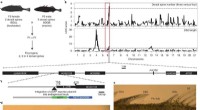
Microevolution refers to small‑scale changes—often at the level of a single gene or a few genes—within a single population over relatively short time spans. It manifests as shifts in allele frequencies in the gene pool.
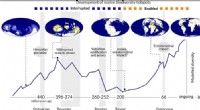
Macroevolution encompasses larger‑scale changes that occur over extended periods, such as the divergence of a species into multiple new species or the emergence of entirely new groups of organisms. These broad changes arise from the cumulative effects of numerous microevolutionary events.
Similarities
Both processes share the same underlying mechanisms: natural selection, mutation, migration, genetic drift, and recombination. The distinction is primarily one of scale and time; microevolutionary changes can, over long periods, accumulate into macroevolutionary transformations. The notion that microevolution is valid while macroevolution is not is a false dichotomy often used by critics of evolutionary theory.
Differences
Microevolution operates over short timescales and typically involves changes in one or a few genes within a limited population. Macroevolution operates over long timescales, affecting entire species or higher taxonomic levels, and reflects the aggregated impact of many microevolutionary changes.
House sparrows introduced to North America in 1852 have since evolved distinct traits in different regions: northern populations are larger-bodied, better suited to colder climates, whereas southern populations are smaller. Rapid reproductive rates in bacteria and insects lead to observable microevolutionary shifts, such as antibiotic and pesticide resistance, often occurring within a few generations.
While macroevolutionary changes are not directly observable due to their vast timescales, the evidence is robust. Comparative anatomy, fossil records, and molecular phylogenetics all converge to show that macroevolution results from the long‑term accumulation of microevolutionary changes. Mechanisms such as mutation, migration, genetic drift, and reproductive isolation drive speciation and the diversification of life.
Macroevolution is evident in the emergence of mammals from reptile‑like ancestors, the diversification of flowering plants into myriad species, and the transition from unicellular to multicellular organisms. Speciation— the process by which new species arise—is synonymous with macroevolution. Molecular evidence, such as the universal use of DNA and ATP across life, underscores the singular evolutionary pathway that has produced today’s biodiversity.
In summary, microevolution and macroevolution are integral, continuous aspects of the same evolutionary process, differing only in scale and duration. Recognizing this continuity strengthens the evidence for evolution as a comprehensive and explanatory framework for the diversity of life.