Alan Majchrowicz/Getty Images
California is the United States’ most ecologically diverse state, home to more than 40,000 unique plant and animal species—including nearly a quarter of all North American plant varieties. Its varied climate, spanning temperate, desert, and highland zones and stretching over 800 miles of coastline, supports an extraordinary array of life, much of which is found nowhere else on Earth. Unfortunately, this rich biodiversity is increasingly jeopardized by non‑native species introduced through human activity.
Across the state, invasive organisms disrupt food webs, outcompete local flora and fauna, and can spread diseases that threaten both wildlife and people. Eradication is difficult; many have established themselves for decades, while new invaders continue to appear. Below are five of the most damaging species currently affecting California, along with the challenges of controlling them.
Yhelfman/Getty Images
The American bullfrog (Lithobates catesbeianus) is North America’s largest frog. Originally confined to the eastern United States, it was first introduced west of the Great Plains in the early 20th century for food and pest control. Today, bullfrogs escape from farms, laboratories, and pet owners, spreading throughout most U.S. states and beyond into Europe, Asia, and South America.
These frogs are aggressive invaders because of their size, voracious appetite, and high reproductive rates. They consume insects, rodents, reptiles, birds, and—critically—other amphibians. In California, they outcompete native species for food and space.
Moreover, bullfrogs carry the chytrid fungus (Batrachochytrium dendrobatidis), harmless to them but lethal to many amphibians. The mountain yellow‑legged frog (Rana muscosa), once common in the Sierra Nevada, has been decimated—losing over 90 % of its historic range—and is projected to go extinct within a few decades if unchecked.
Javier Chiavone/Shutterstock
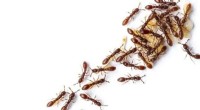
Originating in central South America, Argentine ants (Linepithema humile) first entered the U.S. in the late 1800s via coffee shipments to New Orleans. By 1907 they were recorded in California, where they now dominate the coastline.
These ants form supercolonies that can include a trillion individuals and multiple queens—making them the largest multicellular collective on Earth. Their aggressive behavior allows them to dominate other ant species, earning them the title of California’s most pervasive pest.
Argentine ants also maintain a mutualistic relationship with aphids and other sap‑sucking insects, protecting them from predators in exchange for honeydew. This partnership amplifies pest populations and damages crops, and their dominance has made complete eradication unlikely.
Oleg Kovtun/Getty Images
The European green crab (Carcinus maenas) was accidentally introduced to North America in the 1800s via ballast water from trade ships. First found in San Francisco Bay in the late 1980s, it now ranges from California to Alaska.
These crabs predate on native shellfish—clams, mussels, and other crabs—consuming up to 40 individuals per day. They also feed on seagrass, a critical habitat for juvenile fish. The Dungeness crab, endemic to the Pacific coast, has seen its food sources largely depleted.
Economic losses from green crabs amount to roughly $20 million annually, according to Abt Associates Inc. Attempts to control them in the San Francisco Bay Area failed when the crabs ceased cannibalizing one another upon capture, allowing populations to rebound. The species appears firmly established.
James Warwick/Getty Images
The mute swan (Cygnus olor) has long symbolized status in European culture, but its introduction to the United States during the Victorian era led to unintended ecological consequences. Some swans escaped from zoos and estates, establishing feral populations.
Despite their graceful appearance, mute swans are aggressive and can attack humans and dogs. Weighing roughly 30 pounds each, they outcompete native waterfowl for vegetation, rapidly degrading marshlands that provide food and shelter for indigenous species.
Their rapid reproduction threatens California’s native tundra swan (Cygnus columbianus) and trumpeter swan (Cygnus buccinator). The competition for resources could drive native swan populations to decline.
Moelyn Photos/Getty Images
Ice plant (Carpobrotus edulis) is arguably California’s most pervasive vegetative invader. Introduced in the early 1900s to stabilize railroad and highway banks, its growth thrives in coastal climates similar to its South African native range.
It forms dense, low‑lying mats that quickly monopolize space and nutrients, outcompeting native flora. While initially valued for erosion control, its heavy leaves can destabilize slopes, contributing to landslides.
State agencies and community volunteers have undertaken extensive removal efforts along beaches, which have resulted in increased plant diversity and improved habitats for wildlife. However, ice plant’s ability to regenerate from even a small stem fragment means that total eradication remains elusive.