Nicolas‑SB/Shutterstock
As of June 2024, only 26 % of the world’s seafloor has been mapped, yet the ocean’s hidden marvels keep expanding. From satellite imagery of Australia’s Great Barrier Reef to the eerie underwater waterfall off East Africa, NASA’s sensors routinely spot shipwrecks. Yet one such image revealed a 600‑foot living structure that scientists now know is a giant coral colony, not a sunken vessel.
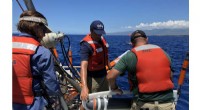
During an October 2024 expedition in Honiara, Solomon Islands, the National Geographic Society’s Pristine Seas team encountered a massive formation that, from the surface, resembled a shipwreck. Divers soon discovered it to be Earth’s largest known single‑species coral colony, belonging to Pavona clavus. The colony measures approximately 5.5 m (18 ft) high, 32 m (105 ft) long, 34 m (111.5 ft) wide, and stretches 183 m (600 ft) around—roughly the length of five tennis courts and longer than the largest animal on Earth, the blue whale.
Situated about 13 m (42 ft) beneath the surface in the Coral Triangle’s Three Sisters group, this specimen is a standalone, intricately woven colony of billions of identical polyps. Researchers estimate its age between 300 and 500 years, and its robust health is evident in its brown base speckled with blue, pink, red, and yellow hues.
Jesus Cobaleda/Shutterstock
Like many coral species, Pavona clavus provides critical habitat. Its dome‑shaped architecture shelters crabs, shrimp, juvenile fish, and other invertebrates that local communities rely on for food. Moreover, coral reefs drive the ocean’s carbon cycle: photosynthetic algae convert absorbed CO₂ into oxygen, mitigating water acidity. Without sufficient reef coverage, increasing carbonic acid levels erode coral structures.
A 2024 collaborative study highlighted that safeguarding at least 30 % of the ocean—roughly 190,000 small marine protected areas and 300 large ones—is essential to maintain ecological balance. Yet, as of late 2024, only 8.2 % of marine environments receive protection. In a National Geographic Society press release, Pristine Seas scientist Eric Brown noted that large colonies like this Solomon Islands specimen possess high reproductive potential, aiding reef recovery after damage.
“For the people of the Solomon Islands, this mega coral discovery is monumental. It reinforces the importance of our ocean, which sustains our communities, traditions, and future. Such discoveries remind us of our duty to safeguard these natural wonders, not only for their ecological value but for the livelihoods and cultural identity they provide,” — Ronnie Posala, Fisheries Officer, Ministry of Fisheries and Marine Resources.