There's something infinitely fascinating about peering at everyday objects through a microscope. The hidden world that emerges reminds us that we are but one small part of a vast, interconnected ecosystem.
Insects, however, can also reveal unsettling details that challenge our comfort. While spiders often trigger primal fear, the true source of unease may lie in the intricate morphology of ants when magnified to astonishing detail.
Ants are remarkable social insects, coordinating complex tasks despite their minuscule brains. Yet, the closer we look, the more they appear as bizarre, almost otherworldly creatures.
Rusm/Getty Images
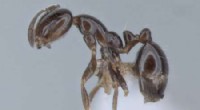
Featuring strong mandibles, top‑mounted compound eyes, dual antennae, and a pressure‑driven tongue, the head of an ant is a marvel of evolutionary engineering. Each species displays variations in eye lens count and mandible shape, all serving the colony’s needs.
In 2022, Lithuanian photographer Eugenijus Kavaliauskas captured a carpenter ant at five‑fold magnification. The resulting image resembled an eldritch being rather than a familiar insect.
Building on that, the University of New Hampshire released a 2023 electron‑microscope image of an Ecuadorian leafcutter ant. While slightly less unnerving, it still underscores the alien appearance of ants when viewed at extreme close‑up.
Cornel Constantin/Shutterstock
These images remind us that beneath the surface, even the most common creatures possess astonishing complexity—often beyond what our eyes can perceive.