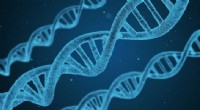
DNA (Deoxyribonucleic acid) is a double helix structure resembling a twisted ladder. It consists of two long strands of nucleotides wound around each other. Here's a breakdown:
1. Nucleotides:
- The basic building blocks of DNA are nucleotides. Each nucleotide consists of:
- A sugar molecule: Deoxyribose (hence the name deoxyribonucleic acid)
- A phosphate group: A phosphorus atom attached to four oxygen atoms.
- A nitrogenous base: There are four types: Adenine (A), Thymine (T), Guanine (G), and Cytosine (C).
2. Pairing of Bases:
- The two strands of DNA are held together by hydrogen bonds between the nitrogenous bases.
- Specific base pairing rules apply:
- Adenine (A) always pairs with Thymine (T)
- Guanine (G) always pairs with Cytosine (C)
- This complementary pairing is crucial for DNA replication and protein synthesis.
3. Double Helix:
- The two strands of DNA twist around each other to form a double helix.
- This helical structure provides stability and allows for efficient packing of the long DNA molecule within the cell.
4. Backbone:
- The sugar and phosphate groups form the backbone of each DNA strand, running along the outside of the helix.
- The nitrogenous bases project inwards, forming the "rungs" of the ladder.
5. Directionality:
- Each strand of DNA has a directionality, referred to as 5' to 3' (read from left to right).
- The 5' end has a phosphate group attached to the 5' carbon of the deoxyribose sugar, while the 3' end has a hydroxyl group attached to the 3' carbon.
6. Function:
- DNA carries the genetic instructions used in the development and functioning of all living organisms.
- It contains the blueprints for proteins and other molecules essential for life.
1. Sugar:
- The sugar molecule in DNA is deoxyribose, a five-carbon sugar.
- It forms the central core of the nucleotide.
2. Phosphate Group:
- The phosphate group is attached to the 5' carbon of the deoxyribose sugar.
- It carries a negative charge, making the nucleotide acidic.
3. Nitrogenous Base:
- The nitrogenous base is attached to the 1' carbon of the deoxyribose sugar.
- It is responsible for the genetic code of DNA.
- The four nitrogenous bases in DNA are:
- Adenine (A): A purine base with a double-ring structure.
- Thymine (T): A pyrimidine base with a single-ring structure.
- Guanine (G): A purine base with a double-ring structure.
- Cytosine (C): A pyrimidine base with a single-ring structure.
4. Bonding:
- The phosphate group forms a covalent bond with the 5' carbon of the sugar molecule.
- The nitrogenous base forms a covalent bond with the 1' carbon of the sugar molecule.
5. Function:
- Nucleotides are the building blocks of DNA and RNA.
- They also play important roles in energy transfer (ATP) and signal transduction.
In summary, the structure of DNA and its constituent nucleotides are intricately designed to ensure the efficient storage and transmission of genetic information within living organisms.