1. Complexity and Specialization:
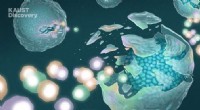
* Animals are multicellular: Dogs, like all animals, are made of trillions of cells that work together in a complex, coordinated way. These cells have specialized functions (muscle cells, nerve cells, etc.) that allow them to form organs and systems.
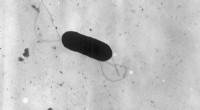
* Bacteria are single-celled: Bacteria are individual organisms, each with a simple structure and limited abilities. They lack the genetic complexity and cellular specialization to form the vast array of tissues and organs found in a dog.
2. Genetic Differences:
* Dogs have a complex genome: Their DNA contains blueprints for building a dog, including instructions for how cells differentiate and interact. This genetic code is vastly different from a bacterium's.
* Bacteria have a simpler genome: Bacterial DNA is much smaller and contains instructions for their own basic functions, not for creating an animal.
3. Developmental Processes:
* Animals develop through embryogenesis: From a single fertilized egg, an animal undergoes a complex series of cell divisions and differentiations to form an embryo, then a fetus, and finally a mature organism.
* Bacteria lack this developmental process: They reproduce by simple cell division, creating identical copies of themselves.
4. Evolutionary History:
* Different evolutionary paths: Animals and bacteria evolved on separate branches of the tree of life. They have diverged significantly over billions of years, resulting in fundamental differences in their cellular structure, genetics, and development.
In essence, bacteria are like single-celled building blocks, while animals are complex structures made from trillions of specialized blocks. It's like trying to build a skyscraper from only pebbles - the basic components are just too different.