Here's a breakdown of the key concepts within this framework:
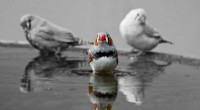
* Variation: Individuals within a population show variation in their traits. This variation can be due to genetic differences, environmental influences, or a combination of both.
* Heritability: Some of these variations are heritable, meaning they can be passed on from parents to offspring.
* Competition: Organisms compete for limited resources, such as food, water, shelter, and mates.
* Natural Selection: Individuals with traits that give them an advantage in the competition for resources are more likely to survive and reproduce. This means they are more likely to pass on those advantageous traits to their offspring.
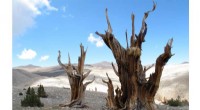
* Adaptation: Over generations, the accumulation of these advantageous traits leads to the adaptation of the population to its environment.
This process of differential reproductive success is the driving force behind evolution by natural selection. It is not about individual organisms becoming "better" or "more advanced," but rather about the gradual change in the genetic makeup of a population over time as those individuals best suited to their environment survive and reproduce.
It is important to note that this is a simplified explanation. There are many other factors that contribute to evolution, such as genetic drift, gene flow, and mutations. However, natural selection is the primary mechanism responsible for the adaptation of organisms to their environment.