Similarities (shared ancestry and evolution):
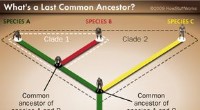
* Common Ancestry: All living organisms share a common ancestor. This means they inherit the same basic genetic material and cellular structures, leading to fundamental similarities across all life forms.
* Natural Selection: The process of natural selection favors traits that increase an organism's survival and reproductive success. This leads to the accumulation of similar adaptations in organisms living in similar environments, even if they are not closely related.
* Convergent Evolution: When unrelated organisms evolve similar traits due to adapting to similar environments or ecological niches, this is called convergent evolution. For example, the streamlined body shape of dolphins and sharks.
* Homologous Structures: These are structures with similar underlying anatomy and development but different functions. They indicate shared ancestry. For example, the forelimbs of humans, whales, and bats.
Differences (divergence and adaptation):
* Mutations: Changes in the DNA sequence can lead to new traits. These mutations are random and can be beneficial, harmful, or neutral. Beneficial mutations are more likely to be passed on to future generations.
* Genetic Drift: Random fluctuations in allele frequencies within a population can lead to differences in the gene pool over time, especially in small populations.
* Natural Selection: The environment constantly selects for traits that enhance survival and reproduction in a particular environment. This can lead to divergence in traits between populations inhabiting different environments.
* Adaptive Radiation: A rapid diversification of species from a common ancestor, often driven by the exploitation of new resources or environments.
* Isolation: Geographic or reproductive isolation prevents gene flow between populations, allowing them to evolve independently and become more distinct over time.
* Sexual Selection: Traits that increase an organism's mating success can be favored, even if they are not directly beneficial for survival. This can lead to the evolution of dramatic differences between males and females within a species.
In summary:
The similarities between organisms reflect shared ancestry and evolutionary pressures. Differences arise from mutations, genetic drift, natural selection, adaptation to specific environments, and isolation. The interplay of these factors leads to the incredible diversity of life on Earth, with both common features and unique adaptations.