Here's a breakdown of the key factors:
1. Signal Sequence:
* Location: Typically located at the N-terminus (beginning) of the protein.
* Composition: Consists of 6-12 hydrophobic amino acids.
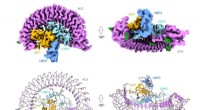
* Function: Recognizes and binds to a complex called the signal recognition particle (SRP).
2. Signal Recognition Particle (SRP):
* Structure: A complex of proteins and RNA.
* Function: Binds to the signal sequence and temporarily pauses protein translation. It then escorts the ribosome-mRNA-nascent polypeptide complex to the ER membrane.
3. ER Membrane:
* Docking: The SRP-ribosome-mRNA complex interacts with a protein receptor on the ER membrane.
* Translocation Channel: The complex docks with a protein channel (translocon) in the ER membrane.
4. Protein Translocation:
* Signal Cleavage: As the protein passes through the translocon, the signal sequence is usually cleaved off by a signal peptidase.
* Folding and Modification: Inside the ER, the protein folds into its correct three-dimensional structure and may undergo further modifications (e.g., glycosylation, disulfide bond formation).
5. ER-Specific Sorting Signals:
* Additional Signals: Some proteins destined for specific ER compartments (e.g., the Golgi apparatus) contain additional sorting signals that determine their final destination.
In summary, proteins are transported through the ER because:
* They possess a signal sequence that directs them to the ER membrane.
* The signal sequence binds to SRP, which guides the protein to the ER translocon.
* The protein is translocated into the ER lumen through the translocon channel.
It's important to note that not all proteins are transported through the ER. Proteins that remain in the cytoplasm lack a signal sequence and are synthesized by free ribosomes.