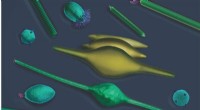
This hypothesis suggests that these organelles arose from invaginations of the plasma membrane in early prokaryotic cells. Here's a breakdown of the proposed steps:
1. Invagination: The plasma membrane of ancient prokaryotic cells began to fold inwards, creating pockets and channels.
2. Compartmentalization: These invaginations enclosed internal spaces, separating them from the cytoplasm and allowing for specialized functions.
3. Evolution of ER: The interconnected network of these invaginations evolved into the ER, providing a vast surface area for protein synthesis, folding, and modification.
4. Formation of Golgi: Specific regions of the ER, possibly through budding and fusion, eventually gave rise to the Golgi apparatus. This organelle became responsible for further processing, sorting, and packaging of proteins and lipids.
Supporting Evidence:
* Similarities in Structure: Both the ER and Golgi exhibit membrane-bound compartments similar to the plasma membrane.
* Continuity: The ER is physically connected to the nuclear envelope, which is also considered part of the endomembrane system.
* Protein Trafficking: The ER and Golgi work in concert to synthesize, modify, and transport proteins throughout the cell, demonstrating a functional connection.
Important Note: While this hypothesis is widely accepted, it's important to understand that the exact mechanisms and evolutionary steps involved are still being actively researched and debated.