Common Forms:
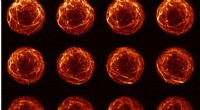
* Cocci (spherical): Similar to some bacteria, some archaea are spherical.
* Bacilli (rod-shaped): Rod-shaped archaea are also common.
* Spirilla (spiral-shaped): Spiral or helical shapes occur in some archaea.
Unique Forms:
* Irregular Shapes: Archaea can exhibit irregular shapes, including square, triangular, and even flat, sheet-like forms. These unusual shapes are often associated with specific environments and adaptations.
* Filamentous: Some archaea form long, thread-like filaments, similar to certain bacteria.
* Pleomorphic: Archaea can change their shape depending on their environment and growth conditions.
Important Considerations:
* Diversity: The body forms of archaea are highly diverse, reflecting their adaptation to extreme environments like hot springs, salt lakes, and the human gut.
* Evolutionary History: Archaea's unique body forms are thought to be a result of their early evolutionary history, separate from bacteria and eukaryotes.
It's important to remember that classifying archaebacteria solely by their body shape is limited. Their unique adaptations and metabolic processes are much more significant in understanding their diversity.