Regeneration in plants refers to the remarkable ability of many plant species to replace lost or damaged tissues and organs with new growth. This process is essential for plants to survive and thrive in various environmental conditions.
Here's a breakdown of regeneration in plant anatomy:
Types of Regeneration:
* Vegetative Regeneration: This involves the formation of new plants from existing plant parts, like roots, stems, leaves, or buds. Examples include:
* Cuttings: Taking a section of a stem or leaf and promoting root development to form a new plant.
* Layering: Bending a branch to touch the soil and encourage root formation.
* Bulbs and tubers: These specialized underground structures store food and can develop into new plants.
* Wound Healing and Repair: Plants possess mechanisms to seal wounds, prevent infections, and regenerate missing tissues.
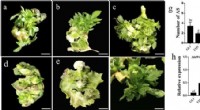
* Callus formation: A protective layer of undifferentiated cells that forms over a wound, protecting the plant and providing a source of cells for new growth.
* Vascular cambium: A layer of meristematic tissue that generates new vascular tissues (xylem and phloem) to replace damaged ones.
Key Players in Plant Regeneration:
* Meristems: Specialized tissues that contain undifferentiated cells capable of dividing and differentiating into various cell types. Apical meristems at the tips of roots and stems are responsible for primary growth, while lateral meristems (vascular cambium and cork cambium) facilitate secondary growth and wound healing.
* Hormones: Plant hormones like auxins, cytokinins, and gibberellins play crucial roles in regulating cell division, differentiation, and regeneration.
* Genes: Specific genes control the expression of proteins involved in cell growth, differentiation, and repair, influencing the plant's regenerative capacity.
Significance of Regeneration:
* Survival: Enables plants to recover from injuries caused by herbivores, pathogens, or environmental stresses.
* Propagation: Allows for efficient and rapid multiplication of desirable plant varieties.
* Adaptation: Provides a mechanism for plants to adjust to changing environmental conditions.
Examples of Plant Regeneration:
* Cuttings: Taking a piece of a succulent leaf and developing it into a new plant.
* Tree regeneration: A tree injured by fire can sprout new shoots from its roots.
* Root regeneration: A broken root can regenerate new root tips, re-establishing water and nutrient absorption.
Understanding plant regeneration provides valuable insights into the resilience and adaptive capabilities of plants. It also offers potential applications in agriculture, horticulture, and biotechnology for improving plant productivity, disease resistance, and crop yield.