Here's why:
* Prokaryotic cells are simple, single-celled organisms that lack a true nucleus and other membrane-bound organelles. Their genetic material (DNA) is located in a region called the nucleoid, which is not enclosed by a membrane.
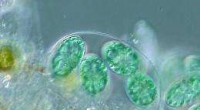
* Eukaryotic cells, on the other hand, are more complex cells that have a true nucleus, where their DNA is housed, and other membrane-bound organelles like mitochondria, Golgi apparatus, and endoplasmic reticulum.
Examples of prokaryotic organisms include bacteria and archaea.