Evolution is the gradual process of change in the characteristics of a species over successive generations. It's not just about becoming "better" or "more complex," but about adapting to the environment and ensuring survival.
Here's a breakdown of why evolution happens:
1. Variation: Individuals within a species are not identical. They possess slight variations in their traits, like size, color, or behavior. This variation is due to mutations in their DNA, which can be inherited.
2. Natural Selection: The environment "selects" for individuals with traits that are advantageous for survival and reproduction. These individuals are more likely to live longer, reproduce, and pass on their favorable genes to their offspring.
3. Inheritance: Offspring inherit traits from their parents, including the advantageous ones selected by the environment. Over time, these advantageous traits become more common in the population, leading to gradual changes in the species.
4. Time: Evolution is a slow process that occurs over many generations. The amount of change depends on the strength of selection pressure, the rate of mutation, and the size of the population.
Key Points to Remember:
* Evolution is not a linear progression towards perfection. It's a continuous process of adaptation to changing environments.
* Evolution does not occur in individuals, but in populations. Individuals cannot evolve during their lifetime, but the traits they pass on contribute to the evolution of the species over generations.
* Evolutionary processes are not goal-oriented. They don't aim to create specific outcomes. Instead, they are driven by random mutations and the selective pressure of the environment.
Why is evolution important?
Understanding evolution helps us:
* Explain the diversity of life on Earth: Evolution is the driving force behind the incredible variety of species we see.
* Predict future changes in species: By understanding the principles of evolution, we can predict how species might adapt to future environmental challenges.
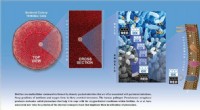
* Develop new technologies and treatments: Evolution provides insights into the development of antibiotic resistance, the spread of diseases, and the potential for genetic engineering.
In conclusion, evolution is a powerful force that shapes life on Earth. It is a continuous process of adaptation and change, driven by variation, natural selection, inheritance, and the passage of time.