1. Natural Selection:
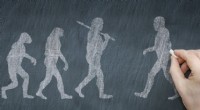
* Definition: The process by which organisms better adapted to their environment tend to survive and reproduce more successfully than those less adapted.
* Key aspects:
* Variation: Individuals within a population exhibit variation in traits.
* Heritability: These traits are passed down from parents to offspring.
* Differential survival and reproduction: Individuals with certain traits are more likely to survive and reproduce, passing those traits to the next generation.
* Result: Over time, the population shifts towards individuals with advantageous traits.
2. Artificial Selection:
* Definition: The process by which humans intentionally select and breed organisms with desirable traits.
* Key aspects:
* Human intervention: Humans actively choose which individuals reproduce.
* Desired traits: Humans select for specific traits that are beneficial for their purposes.
* Result: Over time, the population develops traits that are desirable for human use, such as increased milk production in cows or larger fruit size in crops.
Other forms of selection:
* Sexual selection: Differential success in mating based on traits that increase attractiveness to potential mates.
* Kin selection: Differential success in reproduction based on helping close relatives, even if it reduces the individual's own reproductive success.
In summary, selection is a fundamental process in evolution, where organisms with advantageous traits are more likely to survive and reproduce, leading to changes in the genetic makeup of populations over time.