1. Observing the Building Blocks of Life:
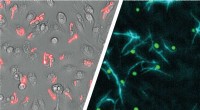
* Early Microscopes: Before the invention of the microscope, the very existence of cells was unknown. Early microscopes, though crude, allowed scientists like Robert Hooke to observe the cell walls of cork, giving us the term "cell."
* Improved Resolution: As microscopes improved, they revealed more details, allowing scientists to see the nucleus, cytoplasm, and other cellular components.
2. Connecting Structure and Function:
* Observing Living Cells: The ability to observe living cells using microscopes helped scientists understand how cells function. They saw how cells moved, divided, and interacted with their environment.
* Uncovering Diversity: The microscope showed the vast diversity of cells, from simple bacteria to complex animal and plant cells. This diversity hinted at the complex organization of life.
3. Formulating the Theory:
* Evidence-Based Theory: The observations made with microscopes provided the empirical evidence necessary to formulate the cell theory. Scientists like Schleiden, Schwann, and Virchow were able to make crucial observations that led to the cornerstone statements of the theory:
* All living things are made up of cells.
* Cells are the basic unit of life.
* All cells arise from pre-existing cells.
In summary, the microscope revolutionized our understanding of life by allowing us to see the fundamental building blocks – cells – and their intricate workings. Without this powerful tool, the cell theory, a cornerstone of modern biology, wouldn't have been possible.