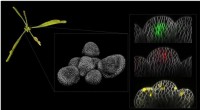
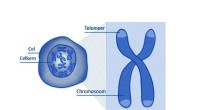
* Organisms are built from organized levels of complexity. It starts with individual cells, which are the basic unit of life.
* Cells work together to form tissues. These are groups of similar cells with a common function.
* Tissues work together to form organs. These are structures made up of different tissues that perform a specific function.
* Organs work together to form organ systems. These are groups of organs that cooperate for a larger, more complex function.
* Organ systems working together form a complete organism. This is a living being capable of carrying out all the processes necessary for life, like growth, reproduction, and response to stimuli.
Analogy:
Imagine building a house. You start with bricks (cells), then you build walls (tissues), then you add rooms (organs), then you create a functional house with different rooms (organ systems). The entire house (organism) is built from these smaller, interconnected components.
Key takeaway:
Organ systems are a crucial part of an organism, but they don't become the organism on their own. They are part of a hierarchical organization that builds up from the cellular level to the whole living being.