1. Imaging and Visualization:
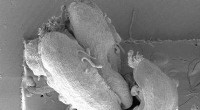
* Microscopes: From light microscopes to electron microscopes and super-resolution microscopy, these tools allow us to visualize structures at increasingly smaller scales, revealing the intricate details of cells, tissues, and even individual molecules.
* Magnetic Resonance Imaging (MRI) and Computed Tomography (CT) scans: These techniques generate 3D images of the body's internal structures, aiding in medical diagnosis and research on organ function and disease.
2. Data Collection and Analysis:
* High-throughput sequencing: Enables rapid and efficient sequencing of DNA and RNA, facilitating large-scale genomic studies, identification of genetic variations, and tracking gene expression.
* Bioinformatics: Uses computer algorithms and statistical methods to analyze massive datasets from biological experiments, revealing patterns and insights that would be difficult to find manually.
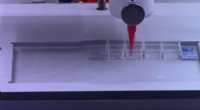
* Lab automation: Automates repetitive tasks, increasing efficiency and accuracy in laboratory experiments.
3. Genetic Engineering and Manipulation:
* CRISPR-Cas9: A powerful gene editing tool that allows scientists to precisely alter DNA sequences, enabling targeted gene therapy, disease modeling, and agricultural research.
* Synthetic biology: Creates new biological parts, devices, and systems by designing and engineering genetic circuits.
* Genetically modified organisms (GMOs): Altering the genetic makeup of organisms to improve crop yields, create disease-resistant animals, and produce pharmaceuticals.
4. Drug Discovery and Development:
* High-throughput screening: Automated screening of large libraries of compounds to identify potential drug candidates.
* In silico modeling: Uses computer simulations to predict the interactions of drugs with biological targets, speeding up the discovery process.
* Personalized medicine: Tailoring treatments based on an individual's genetic profile, leading to more effective and targeted therapies.
5. Environmental Monitoring and Conservation:
* Remote sensing: Satellites and drones can collect data on ecosystems, biodiversity, and environmental changes, providing insights for conservation efforts.
* Environmental DNA (eDNA): Detects the presence of organisms through their DNA traces in water, soil, or air, allowing for more efficient and accurate species monitoring.
6. Education and Outreach:
* Virtual reality (VR) and augmented reality (AR): Provide immersive and interactive experiences that allow students to explore biological concepts in a more engaging way.
* Online databases and resources: Offer a wealth of information and tools for researchers, students, and the general public.
In conclusion, technology is an indispensable tool for advancing biology. It enables us to see the unseen, analyze vast amounts of data, manipulate genetic information, and develop innovative solutions for human health, agriculture, and environmental sustainability. As technology continues to evolve, we can expect even greater breakthroughs in our understanding of life and the world around us.