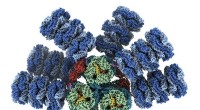
1. Initiation:
* Unwinding: The DNA double helix unwinds and separates at a specific region called the promoter, which acts like a "start" signal for the process.
* Binding: An enzyme called RNA polymerase binds to the promoter region of the DNA.
2. Elongation:
* RNA synthesis: RNA polymerase moves along the DNA template strand, reading the sequence of DNA bases. As it moves, it assembles a complementary strand of RNA using free nucleotides.
* Base pairing: RNA polymerase pairs the DNA bases with their complementary RNA bases:
* Adenine (A) in DNA pairs with Uracil (U) in RNA
* Thymine (T) in DNA pairs with Adenine (A) in RNA
* Guanine (G) in DNA pairs with Cytosine (C) in RNA
* Cytosine (C) in DNA pairs with Guanine (G) in RNA
* Growing RNA strand: The newly synthesized RNA molecule grows, extending from the 5' to the 3' end.
3. Termination:
* Stop signal: RNA polymerase reaches a specific sequence on the DNA called the terminator, which signals the end of transcription.
* Release: RNA polymerase releases the newly synthesized RNA transcript and detaches from the DNA template.
The resulting RNA molecule is called messenger RNA (mRNA). It now carries the genetic information from the DNA to the ribosomes, where it will be used to make proteins.
Here's a simple analogy:
Think of the DNA strand as a blueprint for a house. The RNA polymerase is like a construction worker who reads the blueprint and builds a miniature model of the house using building blocks. This model is the mRNA, which carries the instructions for building the actual house (the protein) to the construction site (the ribosome).
Key points to remember:
* Only one strand of DNA is used as a template for transcription, called the template strand.
* The other strand of DNA is called the coding strand and is essentially the same sequence as the newly synthesized RNA (except for the substitution of uracil for thymine).
* Transcription takes place in the nucleus of eukaryotic cells.
* RNA polymerase is a complex enzyme that plays a crucial role in the transcription process.
Let me know if you have any other questions!