Here's why:
* Nucleus: Eukaryotic cells have a true nucleus, a membrane-bound organelle that contains the cell's DNA. This DNA holds the instructions for all the cell's activities.
* Control Center: The nucleus acts as the control center of the cell. It dictates what proteins to make, when to divide, and how to respond to its environment.
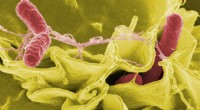
In contrast, prokaryotic cells (like bacteria) do not have a nucleus. Their DNA is located in a region called the nucleoid, but it's not enclosed within a membrane.
So, the key takeaway is that eukaryotic cells are the ones with a nucleus that governs all their cellular functions.