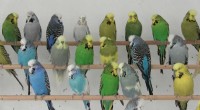
1. Variation: Individuals within a population have slight differences in their traits (e.g., beak size in birds, fur color in mammals). These variations arise due to random mutations in their DNA.
2. Overproduction: Organisms produce more offspring than the environment can support. This leads to competition for resources like food, shelter, and mates.
3. Competition: Individuals with traits that make them better suited to their environment are more likely to survive and reproduce. This means they pass on their advantageous genes to their offspring.
4. Inheritance: The offspring inherit the advantageous traits from their parents, leading to an increased frequency of those traits in the population over generations.
5. Adaptation: Over time, as advantageous traits become more common and disadvantageous traits become less common, the population becomes better adapted to its environment.
Key Points about Natural Selection:
* It's not random: While the initial variations are random, the selection process is driven by environmental pressures.
* It acts on existing traits: Natural selection cannot create new traits. It only acts on traits that already exist within a population.
* It's a slow process: Evolution takes place over many generations, often spanning thousands or even millions of years.
Examples of Natural Selection:
* Peppered Moths: The color of peppered moths changed over time in response to industrial pollution. Darker moths had an advantage in polluted areas, while lighter moths thrived in cleaner areas.
* Antibiotic Resistance: Bacteria evolve resistance to antibiotics, making infections harder to treat. This is because bacteria with mutations that help them survive antibiotics are more likely to reproduce.
* Darwin's Finches: The beaks of Darwin's finches on the Galapagos Islands have adapted to different food sources, demonstrating how natural selection can lead to the diversification of species.
It's important to remember that natural selection is not the only force driving evolution. Other factors, like genetic drift and gene flow, can also play a significant role.