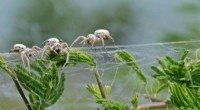
1. Variation: Individuals within a population exhibit variation in their traits. This variation can be caused by genetic mutations, recombination, or other factors.
2. Heritability: Some of these variations are heritable, meaning they can be passed down from parents to offspring.
3. Differential survival and reproduction: Individuals with traits that are advantageous in their environment are more likely to survive and reproduce. This is because they are better able to compete for resources, avoid predators, and find mates.
4. Evolution: Over time, the advantageous traits become more common in the population, while less advantageous traits become less common. This gradual change in the frequency of traits in a population is known as evolution.
In essence, natural selection is a process of "survival of the fittest," where the "fittest" individuals are those who are best adapted to their environment. This process leads to the evolution of organisms over time, as they become better suited to their surroundings.
It's important to note that Darwin's theory of evolution by natural selection is a powerful and well-supported explanation for the diversity of life on Earth. It has been tested and refined over the years, and continues to be a cornerstone of modern biology.