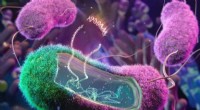
1. Prokaryotic: Bacteria lack a nucleus and other membrane-bound organelles found in eukaryotic cells. Their genetic material (DNA) is located in a region called the nucleoid.
2. Unicellular: Bacteria are single-celled organisms, meaning they are complete living organisms on their own.
3. Diverse metabolism: Bacteria exhibit a remarkable variety of metabolic pathways, allowing them to thrive in a wide range of environments, from extreme heat to intense cold, and from acidic to alkaline conditions. They can utilize various energy sources, including sunlight, organic compounds, and inorganic compounds.
4. Reproduction by binary fission: Bacteria reproduce asexually through a process called binary fission, where a single cell divides into two identical daughter cells. This allows for rapid population growth in favorable conditions.