Here's a breakdown of the process:
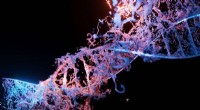
1. DNA contains the genetic code: DNA acts like a blueprint, containing instructions for building and maintaining an organism. These instructions are encoded in the sequence of its four nucleotide bases (adenine, guanine, cytosine, and thymine).
2. Transcription: The DNA code is transcribed into RNA, a similar molecule. This process takes place in the nucleus of the cell.
3. Translation: The RNA molecule travels to the ribosomes, where it is translated into a chain of amino acids. This chain folds into a specific three-dimensional structure, forming a protein.
4. Proteins perform various functions: Proteins are the workhorses of the cell, carrying out a wide variety of tasks, including:
* Enzymes: Catalyze chemical reactions.
* Structural components: Provide support and shape to cells and tissues.
* Hormones: Act as chemical messengers.
* Antibodies: Defend the body against infection.
* Transport molecules: Move substances across cell membranes.
Therefore, DNA acts as the master instruction manual, and proteins are the products that carry out the instructions.