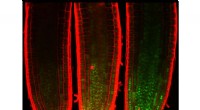
Here's a breakdown:
* Cyclins: These are regulatory proteins whose levels fluctuate throughout the cell cycle. They bind to and activate CDKs.
* Cyclin-dependent kinases (CDKs): These are enzymes that phosphorylate (add a phosphate group to) other proteins, which can activate or deactivate them. This phosphorylation is a key mechanism for driving the cell cycle forward.
How it works:
1. Cyclins bind to CDKs, activating them.
2. Activated CDKs then phosphorylate target proteins, leading to changes in cell behavior, such as DNA replication or entry into mitosis.
3. Cyclin levels fluctuate throughout the cell cycle, ensuring that CDKs are active only at the appropriate times.
Key points:
* Different cyclins bind to specific CDKs, leading to activation of different target proteins and specific events in the cell cycle.
* The activity of CDKs is also regulated by phosphorylation, which can either activate or inhibit them.
* Mutations in CDK genes or their regulators can lead to uncontrolled cell growth and cancer.
The interplay of cyclins, CDKs, and their regulators ensures that the cell cycle proceeds in a controlled and orderly manner, ensuring accurate DNA replication and proper segregation of chromosomes.