Here's why:
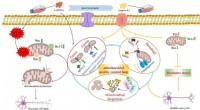
* Mitochondria are the powerhouses of the cell, responsible for aerobic respiration, which requires oxygen.
* Anaerobic respiration, on the other hand, is a less efficient process that occurs when oxygen is limited. It produces far less ATP than aerobic respiration.
* Glycolysis, the first stage of both aerobic and anaerobic respiration, takes place in the cytoplasm. It breaks down glucose into pyruvate.
* In the absence of oxygen, pyruvate is converted to lactic acid (in animals) or ethanol (in yeast) in the cytoplasm, generating a small amount of ATP.
So, while mitochondria are crucial for energy production, they are not involved in the anaerobic breakdown of food molecules.