The Core Principles
1. Variation: Individuals within a population naturally have slight differences in their traits, such as size, color, or behavior. These differences are often due to mutations in their genes.
2. Inheritance: Traits are passed down from parents to offspring. This means that offspring inherit the variations their parents possess.
3. Natural Selection: In a given environment, some variations make individuals better suited to survive and reproduce. These individuals are more likely to pass their advantageous traits onto the next generation.
4. Adaptation: Over many generations, the accumulation of advantageous traits within a population can lead to significant changes. This is adaptation, where a species becomes better suited to its environment.
5. Speciation: If populations become isolated (geographically or reproductively), they can evolve in different ways. Over time, the accumulated differences may become so significant that they can no longer interbreed, resulting in the formation of new species.
The Process in Action
Imagine a population of birds living on an island. Some individuals have slightly longer beaks than others.
* Variation: The beak length variation exists within the population.
* Inheritance: Offspring inherit the beak length of their parents.
* Natural Selection: If the island's environment changes, and only the birds with longer beaks can access the available food, those birds are more likely to survive and reproduce.
* Adaptation: Over time, the average beak length of the bird population will increase because birds with longer beaks have a survival advantage.
* Speciation: If the island is split into two parts, the bird populations on each side will evolve independently. The differences in their environments might lead to further variations in beak length, potentially resulting in the formation of two distinct species.
Important Notes
* Gradualism: Evolution is a gradual process that occurs over many generations. It's not a sudden or dramatic change.
* Randomness: Mutations, the source of variation, are random. However, natural selection is not random. It favors traits that provide a survival or reproductive advantage in a given environment.
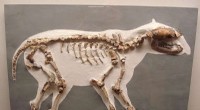
* Evidence: Evolutionary theory is supported by an overwhelming amount of evidence from fossils, genetics, anatomy, and other fields.
Let me know if you'd like a deeper dive into any of these concepts!