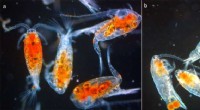
Here's why:
* Prokaryotic cells are simple, single-celled organisms that lack a membrane-bound nucleus and other membrane-bound organelles. Their genetic material (DNA) is located in a region called the nucleoid, which is not enclosed by a membrane.
* Eukaryotic cells, on the other hand, are more complex cells that contain a true nucleus where their DNA is enclosed within a membrane.
Examples of prokaryotic organisms:
* Bacteria
* Archaea
Key differences between prokaryotic and eukaryotic cells:
| Feature | Prokaryotic Cells | Eukaryotic Cells |
|---|---|---|
| Nucleus | Absent | Present |
| Organelles | Few or none | Many |
| DNA structure | Circular | Linear |
| Size | Smaller (1-10 micrometers) | Larger (10-100 micrometers) |
| Examples | Bacteria, Archaea | Animals, plants, fungi, protists |
Let me know if you'd like more information on prokaryotes or eukaryotes!