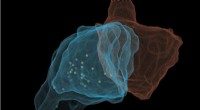
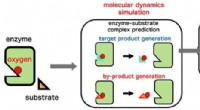
* Lock and Key Model: Enzymes work like a lock and key. They have a specific active site, a three-dimensional region on the enzyme's surface, that fits only a specific molecule, called the substrate. The shape of the active site is complementary to the shape of the substrate.
* Induced Fit Model: This model is a more refined explanation. While the active site is initially shaped to accommodate the substrate, it can slightly adjust its shape to make a tighter, more precise fit.
How Shape Determines Function:
* Specificity: The unique shape of an enzyme's active site ensures that it only interacts with its specific substrate. This specificity is crucial for maintaining the order and control of biochemical reactions in a cell.
* Catalysis: The precise fit between the enzyme and substrate allows the enzyme to facilitate the chemical reaction by bringing the reacting molecules together in the correct orientation, weakening bonds, and providing alternative reaction pathways.
Example:
* Lactase is an enzyme that breaks down lactose (milk sugar). It has a specific active site that only binds to lactose molecules. If the enzyme's shape were to change, it might not be able to bind to lactose and would lose its ability to digest milk sugar.
In summary: The shape of an enzyme determines its function by enabling it to bind to specific substrates and facilitate specific chemical reactions.