1. Structure and Organization:
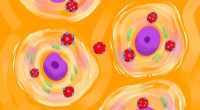
* Prokaryotic: Bacteria are prokaryotic cells, meaning they lack a true nucleus and other membrane-bound organelles. Their DNA is located in a region called the nucleoid, but it's not enclosed within a membrane.
* Simple Structure: Bacteria have a relatively simple internal structure compared to eukaryotic cells. They lack complex organelles like mitochondria, Golgi apparatus, and endoplasmic reticulum.
* Cell Wall: Almost all bacteria have a rigid cell wall made of peptidoglycan, which provides structural support and protection. This is a defining characteristic of bacteria.
2. Size and Shape:
* Small Size: Bacteria are typically much smaller than eukaryotic cells, ranging from 0.5 to 10 micrometers in diameter.
* Diverse Shapes: They come in various shapes, including spheres (cocci), rods (bacilli), spirals (spirilla), and comma-shaped (vibrios).
3. Reproduction:
* Binary Fission: Bacteria reproduce asexually through binary fission, where a single cell splits into two identical daughter cells. This process is much simpler and faster than the cell division in eukaryotic cells.
4. Metabolism:
* Diverse Metabolic Capabilities: Bacteria exhibit an astonishing diversity in their metabolic capabilities. They can obtain energy from various sources, including sunlight (phototrophs), organic compounds (chemoorganotrophs), or inorganic compounds (chemolithotrophs).
* Nitrogen Fixation: Some bacteria can fix atmospheric nitrogen into usable forms, a crucial process for life on Earth.
5. Adaptation:
* Extremophiles: Bacteria are incredibly adaptable and can thrive in a wide range of environments, including extreme conditions like hot springs, deep-sea vents, and highly acidic or alkaline environments.
6. Importance:
* Essential for Life: Bacteria play crucial roles in ecosystems, from decomposition and nutrient cycling to symbiosis with plants and animals.
* Human Health: While some bacteria are pathogenic and cause diseases, others are essential for human health, like those found in our gut microbiota.
In summary, bacteria cells are unique due to their prokaryotic nature, simple structure, diverse metabolic capabilities, rapid reproduction, and ability to thrive in extreme environments. These features make them a vital part of the planet's biosphere.