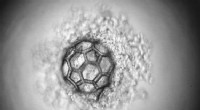
Unicellular Organisms
* Direct Exchange: Single-celled organisms rely on direct diffusion across their cell membrane. This means that all materials, like nutrients and oxygen, enter the cell directly, while waste products exit directly.
* Surface Area to Volume Ratio: The surface area of a unicellular organism is relatively large compared to its volume. This allows for efficient diffusion, as the distance for materials to travel is short.
* Examples: Bacteria, amoeba, paramecium.
Multicellular Organisms
* Specialized Systems: Multicellular organisms have evolved complex organ systems to facilitate material exchange:
* Respiratory System: For gas exchange (taking in oxygen and releasing carbon dioxide).
* Circulatory System: For transporting nutrients, oxygen, and waste products throughout the body.
* Digestive System: For breaking down food into absorbable nutrients.
* Excretory System: For removing waste products.
* Surface Area to Volume Ratio: As multicellular organisms become larger, their surface area to volume ratio decreases. This makes direct diffusion across their outer surface inefficient. Therefore, specialized systems are crucial for maintaining internal balance.
Comparing the Two
| Feature | Unicellular Organisms | Multicellular Organisms |
|------------------------|----------------------|------------------------|
| Material Exchange | Direct diffusion | Specialized organ systems |
| Surface Area to Volume | High | Low |
| Complexity | Simple | Complex |
Illustrative Example
Think of a fish in water. It breathes through gills, a specialized surface for gas exchange. These gills maximize surface area, allowing for efficient oxygen uptake from the water. A single-celled organism like an amoeba, in contrast, absorbs oxygen directly through its cell membrane.
Let me know if you have any other questions!