1868: Friedrich Miescher isolated a substance he called "nuclein" from the nuclei of white blood cells. This substance was later recognized as containing both DNA and RNA.
1939: Torbjörn Caspersson and Jean Brachet independently showed that RNA was particularly concentrated in the cytoplasm of cells, suggesting it had a role in protein synthesis.
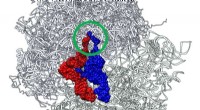
1956: George Emil Palade discovered ribosomes, which were later found to be the sites of protein synthesis and contain large amounts of RNA.
1957: Severo Ochoa synthesized RNA in the laboratory, paving the way for further studies.
1958: Francis Crick proposed the "central dogma" of molecular biology, which stated that DNA contains the genetic information, which is transcribed into RNA, and then translated into proteins.
1961: Marshall Nirenberg and Heinrich Matthaei deciphered the first codon, demonstrating the role of RNA in translating genetic information into proteins.
Therefore, it's not possible to pinpoint a single "discoverer" of RNA. Instead, it was a cumulative effort by numerous scientists over several decades.