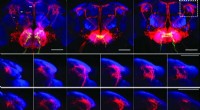
Immunohistochemistry (IHC) is a powerful technique used in biology and medicine to visualize the distribution and location of specific proteins within tissues. It's like a microscopic detective work, allowing scientists to see where specific proteins are located within cells and tissues, providing valuable insights into various biological processes.
Here's how it works:
1. The Target: IHC focuses on antigens, which are specific molecules, often proteins, that the immune system recognizes.
2. The Detective: Scientists use antibodies which are Y-shaped proteins designed to bind specifically to the antigen of interest. These antibodies act as "detectives" searching for their target antigen within the tissue.
3. The Signal: The antibodies are often labeled with a visible marker, such as an enzyme that produces a colored product or a fluorescent dye. This labeling allows the scientists to visualize the location of the antigen within the tissue.
4. The Image: The tissue sample is then examined under a microscope, revealing the location of the antigen of interest. This information can be used to understand a variety of biological processes, such as:
* Cell differentiation: Identifying different cell types within a tissue.
* Disease diagnosis: Identifying the presence of specific proteins associated with certain diseases.
* Drug development: Studying the effects of drugs on protein expression.
* Tumor characterization: Identifying the type and grade of cancer cells.
Why is immunohistochemistry so important?
IHC plays a crucial role in many areas of biology and medicine, offering:
* Detailed insights into cellular processes: IHC allows researchers to visualize how proteins interact within tissues, providing a better understanding of their roles.
* Disease diagnosis and prognosis: IHC is widely used in pathology to diagnose diseases and determine their progression.
* Personalized medicine: IHC can be used to tailor treatment plans to individual patients based on their specific protein expression patterns.
* Drug discovery: IHC can help researchers evaluate the effectiveness of new drugs and identify potential targets for drug development.
In short, immunohistochemistry provides a visual roadmap to the complex world of proteins within tissues, enabling scientists to understand biological processes, diagnose diseases, and develop new treatments.