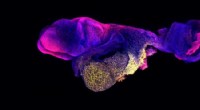
1. X-ray Diffraction:
* Key tool: This technique was crucial in determining the double helix structure of DNA. It involves shining X-rays on DNA crystals and analyzing the diffraction patterns produced.
* Impact: The groundbreaking work of Rosalind Franklin using X-ray diffraction produced the famous "Photo 51," which provided vital evidence for the double helix model proposed by Watson and Crick.
2. Molecular Modeling Software:
* Key tool: This software allows scientists to build and manipulate 3D models of DNA molecules based on the known atomic structure.
* Impact: This provides a visual representation of DNA's structure, allowing researchers to understand its properties, interactions with other molecules, and how mutations might affect its function.
3. Electron Microscopy:
* Key tool: This technique allows scientists to view DNA molecules at very high magnification, revealing details about its structure.
* Impact: Electron microscopy has been used to study the shape and packaging of DNA within cells.
4. DNA Sequencing:
* Key tool: This technology allows scientists to determine the exact order of nucleotide bases (A, T, C, G) in a DNA molecule.
* Impact: While DNA sequencing doesn't directly visualize the structure, it provides crucial information about the sequence of bases, which in turn determines the molecule's structure and function.
5. Visual Representations:
* Key tool: These are diagrams, models, and animations that simplify and illustrate the structure of DNA. They often use colors, shapes, and labels to represent the different components of DNA.
* Impact: Visual representations make DNA's structure more accessible to a wider audience, promoting understanding and education.
It's important to note that these tools are not isolated, but rather complement each other to provide a comprehensive understanding of DNA's structure and its implications in biology.